
Code unknown/known
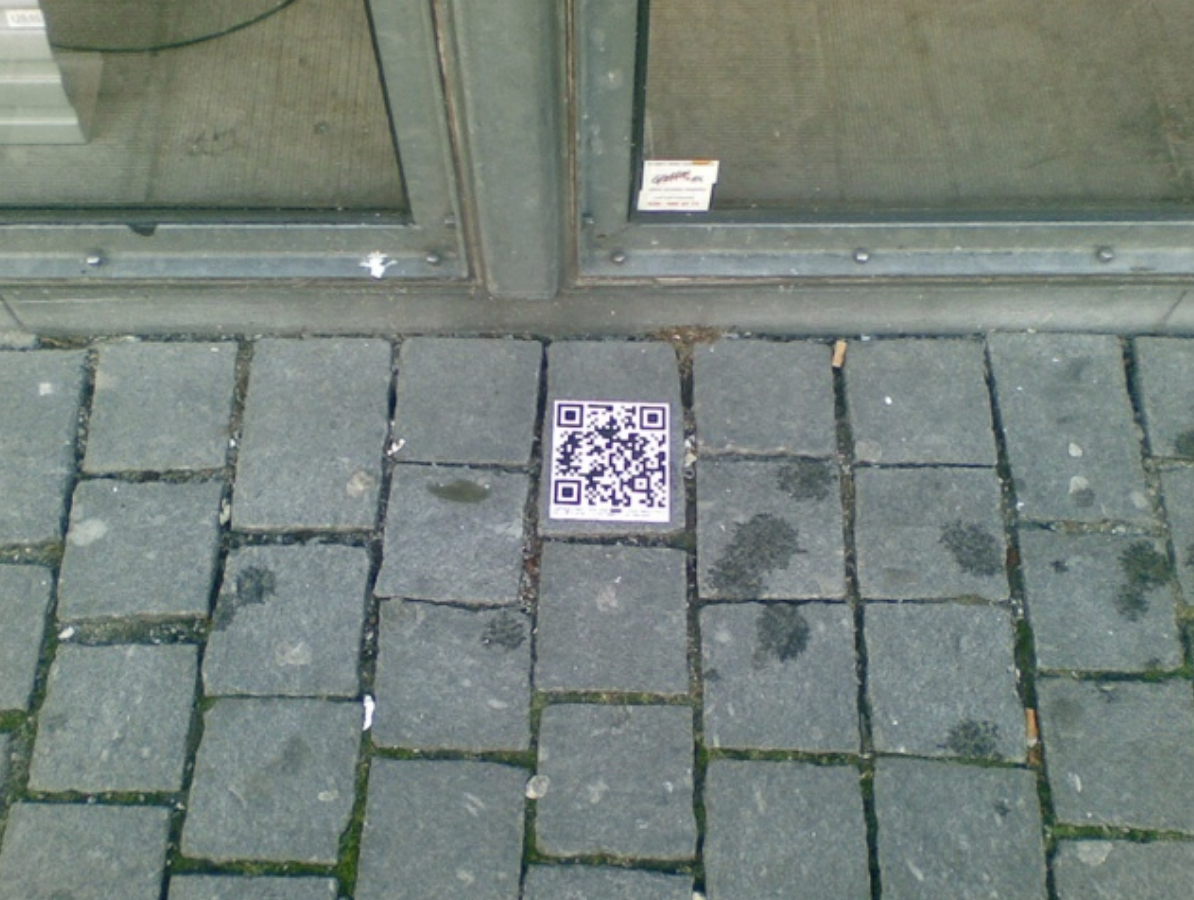
Around 15 years ago, when I was still working for an advertising agency in Shoreditch, I noticed an increase in QR codes being stickered around the neighbourhood on lampposts, bins, windows - whatever surface that might fall within a pedestrian’s line of sight. This was a time when QR codes were starting to feature widely in low-level marketing, to the point where they invited groans from insiders despite being relatively novel amongst the general population. Custom QR codes were starting to become a thing. Those examples where the redundancy of the code allowed for the insertion of a logo. What a time to be alive.
Anyway, this created a half-formed thought in my head at the time, that QR codes were like modern day hieroglyphics. They were a type of sign/symbol that could be recognised by its class through the content and meaning was locked away. Just as hieroglyphics were meant for the gods not mortals, QR codes are meant for machines not humans. You could walk past a QR code and recognise what is was but without any compulsion to know more, knowing that this would involve the effort of using of your device and an app. Ordinary Egyptians no doubt relied on a different kind of translation, perhaps a long walk to the nearest priest or whatever.
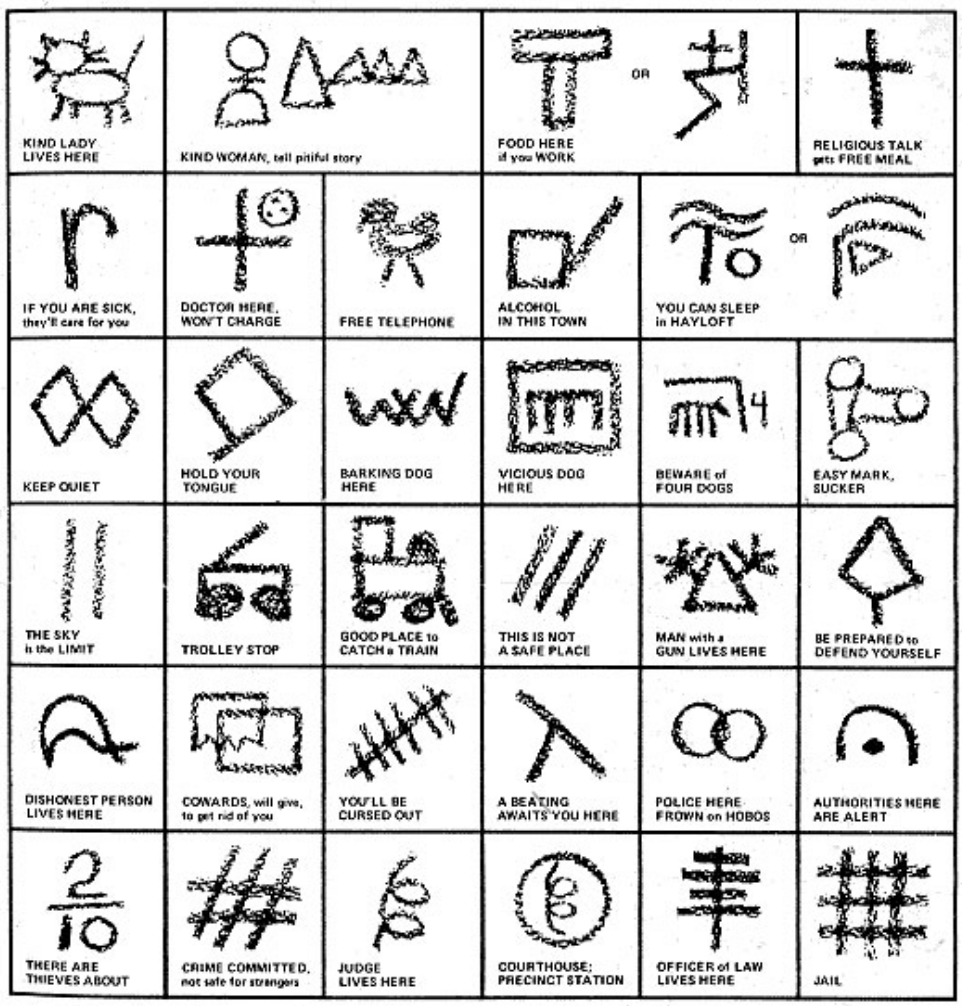
Of course there is something ridiculous in the comparison so that’s perhaps why I then was drawn to the idea of the hobo code as a more appropriate reference. The hobo code was a secret system of signs and symbols allegedly used by vagrants during depression-era America. For example, if a property bore a certain sign on it’s gatepost, a passing hobo might learn from another’s experience that the owner was in possession of a gun and they should give the place a wide berth.
The hobo code, if it existed, provides an example of a system of signs that are only legible to certain people. Unlike hieroglyphics, they are meant for humans but only those that belong to a certain demographic. No doubt the property owners, if they saw them, were meant to interpret these as deranged vandalism. The point is, as with QR codes, not everyone noticed them let alone was able to read them. The legibility of hobo codes was the marker of belonging to a certain group.
Remembering these observations now on 2026, I’m struck by how much has changed in terms of what we now think of the QR code and what some of these lenses - hieroglyphics and the hobo code - tell us about this. QR codes ceased to be an optional aspect of our symbolic environments once COVID struck. The QR check-in became a mandatory way of maintaining distance and avoiding infection whilst we attempted to go about our daily lives.
As a class of signs, QR codes went from ambient marketing curiosity to a mechanism of compliance with the emergency regime almost overnight. “You have to scan the QR code” was the often heard instruction offered to newbies who wondered how they would get their pub meal without risking contact with others. There was a kind of forced literacy at scale, strongly tied to access to goods and services as well as state surveillance of activities, just as the Egyptian gods read their their DMs via ancient symbols.
In an inversion of the hobo code, groups of people became locked out of participation with the signs that overtook their environment. The elderly for example, or just those without smartphones or digital savviness, were locked out everyday activities. The mandatory legibility of the QR code created symbolic losers we could never have envisaged when they were just mysterious marketing bollocks.
QR codes remain with us today and have accelerated a digitisation of every transaction, from cafes to parking meters. There is no charge left in them. From novelty to banality by way of mandate. The mystery of hieroglyphics still remains with us to this day, and their dead messages still need to be deciphered by specialists. Whether they were real or not, hobo codes at least retain a decorative nostalgia that persists beyond their functional use. Our public spaces lost a little bit of mystery when QR codes went mainstream only it wasn’t the organic accumulation of familiarity on it’s own. Like the machine parts that QR codes were originally designed to track, everyday life became another part moving down a state-run assembly line.